


Categories
- Silicon Metal
- Silicon Metal Powder
- Ferro Silicon
- Ferrovanadium
- Ferrotitanium
- Ferro Manganese
- Electrolytic Manganese Flake
- Cored Wire
- Magnesium Metal
- Silicon Briquette
- Silicon Slag
- Enameled Wire
- Silicon Magnesium Alloy
- Silicon Nitride
- Nickel Wire
- Silicon Carbide
- Recarburizer
- Ferro Chrome
- Zinc Wire
- Tundish Refractory Material
- Ladle Refractory Material
- Monolithic Refractory
- Refractory Brick
- Refractory Castable
- Graphite Electrode
- Refractory Raw Material
Latest Products


Contact Us
- marketing@zanewmetal.com
- Huafu Commercial Center, Wenfeng District, Anyang City, Henan Province, China


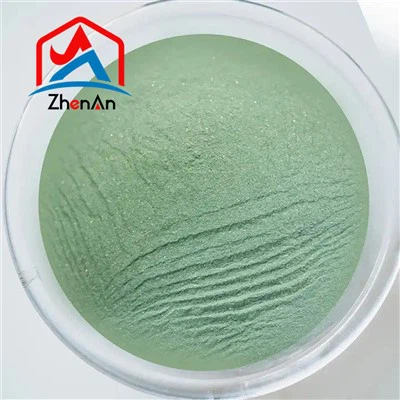
Si Carbide
Model: 85%88%89%80%
Shape: Powder
Material: Silicon Carbide
Metallurgical Black Silicon Carbide 80–89%
Quick Answer: Metallurgical black silicon carbide with approximately 80–89% SiC is used as a silicon- and carbon-bearing material in steelmaking, foundry and refractory applications. Available grades include SiC 80%, 85%, 88% and 89%, with particle size selected according to the furnace or downstream process.
For purchasing, confirm SiC content, free carbon, impurity limits, particle size, quantity and packing before quotation.
Black silicon carbide is produced by high-temperature reaction between silica-based and carbon-bearing raw materials, followed by crushing and screening into the required particle-size range.
For metallurgical applications, industrial SiC grades do not need the ultra-high purity required for semiconductor materials. The key purchasing factors are effective SiC content, carbon contribution, impurity control, particle-size consistency and batch stability.
You can also review our silicon carbide product range for other grades and size options.
Silicon Carbide Grade Options
The current product range covers several industrial SiC levels. The main difference is the effective silicon carbide content and corresponding impurity level.
| Grade | SiC Content | Typical Selection Focus |
|---|---|---|
| SiC 80 | Approx. 80% | Cost-controlled metallurgical addition where ultra-high purity is not required |
| SiC 85 | ≥85% | Steelmaking, foundry and refractory applications requiring higher effective SiC content |
| SiC 88 | Approx. 88% | Balanced grade for metallurgical silicon and carbon addition |
| SiC 89 | Approx. 89% | Higher-SiC industrial grade where tighter chemistry is preferred |
Specification note: Grade names indicate the target SiC level. Final chemistry should follow the agreed purchase specification and actual batch COA.
How to Choose Between SiC 85 and SiC 88
SiC 85 and SiC 88 are both practical industrial grades. The higher grade provides slightly more effective silicon carbide per kilogram, while the final choice should also consider impurity limits, application and purchasing cost.
| Comparison | SiC 85 | SiC 88 |
|---|---|---|
| SiC Content | ≥85% | Approx. 88% |
| Si + C Contribution | High | Slightly higher effective SiC input |
| Typical Use | Steelmaking / Foundry / Refractory | Steelmaking / Foundry / Refractory |
| Selection Focus | Cost-performance balance | Higher SiC level with controlled impurities |
For a more detailed application guide, see our 85% Black Silicon Carbide guide .
You can also review 88% Silicon Carbide applications for steelmaking, foundry and other industrial uses.
Metallurgical Silicon Carbide Applications
Steelmaking
Metallurgical silicon carbide can provide both silicon and carbon to the melt. Depending on the furnace process, it can be used as a supplementary material for deoxidation and composition adjustment.
Foundry Production
In cast iron production, SiC can contribute silicon and carbon during melting. The suitable grade and dosage depend on the starting melt chemistry, furnace practice and required final composition.
Refractory Materials
Industrial black SiC can also be used as a refractory raw material where hardness, thermal stability and wear resistance are required.
Abrasive and Wear-Resistant Applications
Higher-grade black silicon carbide can be processed into granular or powder forms for abrasive and wear-resistant applications. For dedicated abrasive products, grit size and impurity control should be specified separately.
Silicon and Carbon Addition in Steelmaking
One reason metallurgical SiC is selected is that the material contains both silicon and carbon. This can allow both elements to be introduced through one raw material instead of being considered independently.
However, the final SiC dosage should not be fixed only by the nominal product grade. Actual addition depends on:
- Starting silicon content
- Starting carbon content
- Target steel chemistry
- Actual batch SiC content
- Silicon and carbon recovery
- Furnace and slag conditions
Process note: Use your own furnace data and actual batch chemistry when determining the final silicon carbide addition.
Silicon Carbide Particle Size
Particle size affects handling, charging, reaction behavior and material loss. The selected size should match the furnace and addition method.
| Product Form | Reference Size |
|---|---|
| Metallurgical Granules | 0–10 mm |
| Small Granules | 1–3 mm |
| Medium Granules | 3–5 mm |
| Coarse Granules | 5–10 mm |
| Powder | According to required mesh specification |
| Customized Size | Available according to agreed order requirements |
What to Check in a Metallurgical SiC COA
A useful silicon carbide specification should contain more than the nominal SiC percentage.
| Inspection Item | Purchase Check |
|---|---|
| SiC | Confirm the actual effective silicon carbide content |
| Free Carbon | Important for metallurgical carbon contribution |
| SiO₂ | Confirm maximum oxide impurity when specified |
| Fe | Check when downstream chemistry requires iron control |
| Al | Confirm according to the steel or refractory specification |
| Ca | Check when calcium input is restricted |
| Moisture | Important for storage and furnace consistency |
| Particle Size | Confirm the agreed granule or powder distribution |
Metallurgical SiC vs High-Purity Silicon Carbide
Metallurgical silicon carbide and semiconductor-grade silicon carbide should not be treated as the same product.
The SiC 80–89% materials on this page are industrial raw materials for metallurgy, foundry and refractory applications. They are not 99.99% semiconductor-grade SiC and should not be described as wafer material.
If your application requires high-purity SiC powder, semiconductor crystal growth or electronic-grade material, the purity and trace-element specification must be confirmed separately.
Silicon Carbide Quality Control
For repeat industrial purchasing, both chemistry and physical size should remain consistent between batches.
- SiC content inspection
- Free carbon confirmation
- Agreed impurity limits
- Particle-size distribution
- Fines and oversize when specified
- Moisture control
- Packing inspection
- Batch COA confirmation
Silicon Carbide Supply
We can confirm the SiC grade, particle size, impurity limits, quantity and packing according to the required industrial application.

Metallurgical black silicon carbide

Silicon carbide production and inspection
What Affects Metallurgical Silicon Carbide Price?
The quotation varies according to SiC grade, impurity limits, particle size, powder content, order quantity, packing and delivery terms.
For a recent reference for SiC 88%, see our SiC 88% price update .
What to Send for a Silicon Carbide Quote
| Requirement | Information to Provide |
|---|---|
| SiC Grade | 80%, 85%, 88%, 89% or target SiC content |
| Impurity Limits | Free C, SiO₂, Fe, Al, Ca or other required limits |
| Particle Size | Required granule or powder range |
| Quantity | Required order volume |
| Packing | Required packing format |
| Application | Steelmaking, foundry, refractory or other industrial use |
| Delivery | Incoterm and destination port |
Request a Metallurgical Silicon Carbide Quote
Send us your required SiC content, impurity limits, particle size, quantity, packing and application. If you have a target COA or technical specification, include it with your inquiry so we can confirm the correct grade.
Email: marketing@zanewmetal.com
Request a QuoteMetallurgical Silicon Carbide FAQ
Q: What SiC grades are available on this page?
A: The current product reference includes SiC 80%, 85%, 88% and 89% industrial grades.
Q: What is metallurgical silicon carbide used for?
A: It is mainly used in steelmaking, foundry and refractory applications where silicon carbide provides silicon, carbon or high-temperature material properties.
Q: Is this product 99.99% pure silicon carbide?
A: No. The materials on this page are industrial metallurgical SiC grades with approximately 80–89% SiC. High-purity or semiconductor-grade silicon carbide requires a different specification.
Q: What particle size is commonly used for metallurgical SiC?
A: A common metallurgical size is 0–10 mm. Other granule and powder sizes can be supplied according to the furnace and order requirements.
Q: What should I check besides SiC content?
A: Check free carbon, SiO2, metallic impurities, moisture, particle-size distribution and batch consistency.
Q: What information should I send for a quotation?
A: Send the required SiC grade, impurity limits, particle size, quantity, packing, application, Incoterm and destination port.
Hot Tags: si carbide, China si carbide manufacturers, suppliers, factory, SiC Small Briquettes, Silicon Briquette For Steelmaking, FeSi Briquette, HC Si Briquette, Heigh Quality Ferrosilicon Briquette, ferro silicon briquettes
Previous
Green Si Carbide PowderNext
Silicon CarbideYou Might Also Like




Send Inquiry