


Ferro Silicon
Zhen An: Leading Ferro Silicon Manufacture in China
ZhenAn International Co., Limited. is located in Anyang City, China, and has more than 30 years of experience and technology accumulation in the metallurgical industry.
Currently, Zhenan operates fully automatic and intelligent production lines for metallurgical and metal materials, with a stable annual output and sales volume of 150,000 metric tons.
Our factory covers an area of approximately 30,000 square meters, supporting stable and large-scale production.
Quality Assurance
Our quality inspectors strictly control the quality of each link to ensure that each batch of products meets international standards.
Good Service
Zhenan has an excellent and professional team dedicated to providing you with high-quality metallurgical product materials and services.
Customization
According to customer requirements, we also provide customized metallurgical material products with special specifications, shapes and materials.
Fast Delivery
With huge production capacity, we ensure in time delivery and transport to the destination in the first time.
Wide Range Of Applications
ZhenAn metallurgical materials products are widely used in casting, steelmaking, electricity, non-ferrous metals, petrochemicals, glass, building materials and other fields, and are exported to more than 80 countries and regions in the world.


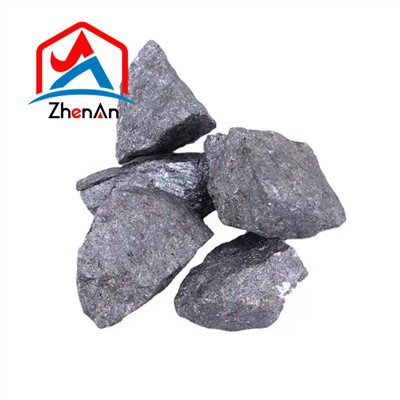


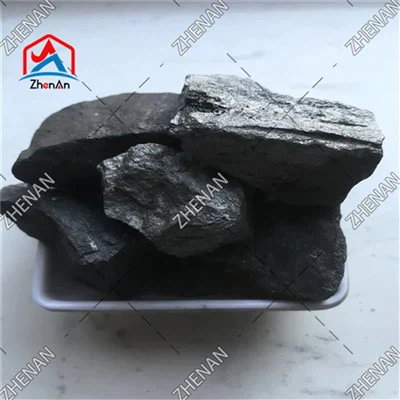


Introduction of Ferrosilicon
Ferrosilicon is an alloy of iron and silicon, usually containing a silicon content of 15 – 90% (weight percentage), depending on usage and application needs. The process of producing Ferrosilicon involves a reduction of silica or sand with coke in the presence of iron. Millscale or scrap irons is generally used in the production process of Ferrosilicon, and Ferrosilicon is usually produced in an electric arc furnace (especially with high silicon content).
Advantages of Ferro Silicon In Steelmaking Process
Used as deoxidizer and alloying agent in steelmaking industry
In order to obtain the chemical composition of qualified steel and ensure the quality of steel, in the final stage of steelmaking must be deoxidized, the chemical affinity between silicon and oxygen is very large, so ferro silicon is a strong deoxidizer for precipitation and diffusion in steelmaking. Adding a certain amount of silicon to steel can significantly improve the strength, hardness and elasticity of steel, so when smelting structural steel (containing silicon 0.40-1.75%), tool steel (including SiO.30-1.8%), spring steel (including SiO.40-2.8%) and transformer silicon steel (containing silicon 2.81-4.8%), Ferro silicon is also used as an alloying agent. At the same time, improving the shape of inclusions and reducing the content of gas elements in molten steel is an effective new technology to improve steel quality, reduce cost and save iron. It is especially suitable for continuous casting steel deoxidation requirements. Practice has proved that ferrosilicon not only meets the deoxidation requirements of steelmaking, but also has desulfurization performance and has the advantages of heavy ratio and strong penetration.
In addition, in the steelmaking industry, the use of ferro silicon powder at high temperature can release a lot of heat, which is often used as ingot cap heating agent to improve the quality and recovery of ingot.
It is used as inoculant and nodulator in the cast iron industry
Cast iron is an important metal material in modern industry, it is cheaper than steel, easy to melt and smelt, has excellent casting performance and much better earthquake resistance than steel. In particular, ductile iron, its mechanical properties reach or approach the mechanical properties of steel. Adding a certain amount of ferro silicon to cast iron can prevent the formation of carbides in iron and promote the precipitation and spheroidization of graphite, so in the production of ductile iron, ferro silicon is an important inoculant (to help precipitate graphite) and spheroidizing agent.
Used as reducing agent in ferro alloy production
Not only the chemical affinity between silicon and oxygen is very large, but also the carbon content of high-silicon iron silicon is very low. Therefore, high-silicon ferro silicon (or siliceous alloy) is a commonly used reducing agent in the ferro alloy industry when producing low-carbon ferroalloys.
Types Of Ferrosilicon
Ferrosilicon is often categorized according to the levels of various minor components, depending on the application requirements. These categories include:
Low-carbon ferrosilicon and ultra-low-carbon ferrosilicon
Used to avoid re-introducing carbon during the manufacture of stainless steel and electrical steel.
Low-titanium (high-purity) ferrosilicon
Used to avoid TiN and TiC inclusions in electrical steel and some special steels.
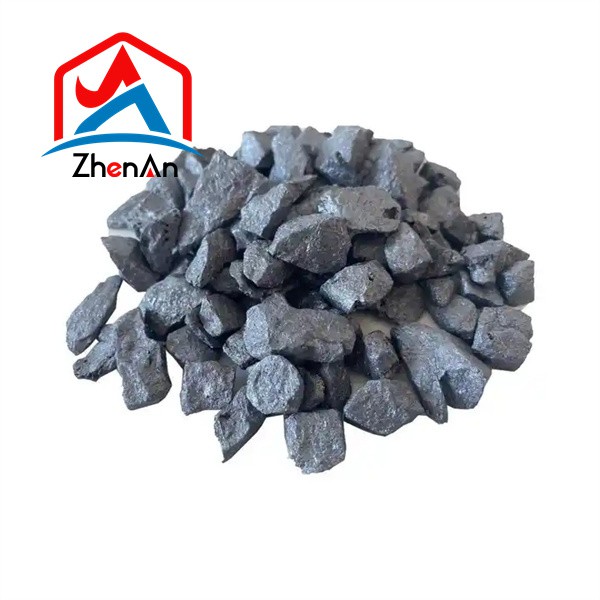
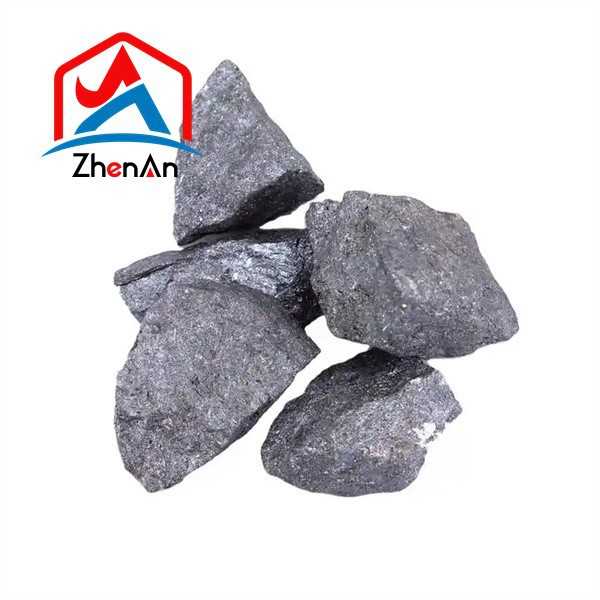
Low-aluminium ferrosilicon
Used to avoid the formation of hard Al2O3 and Al2O3–CaO inclusions in a range of steel types.
Special ferrosilicon
A general term that covers a range of tailor-made products containing other alloying elements.
The Physical And Chemical Properties of Ferrosilicon
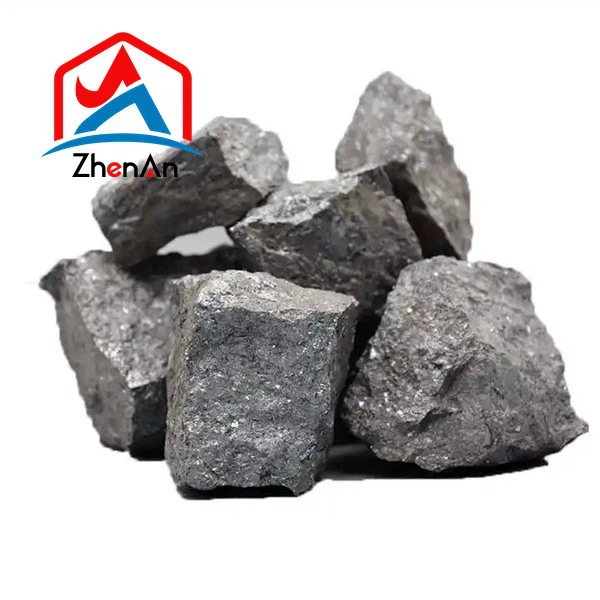
The shape of the ferrosilicon powder particles may be spherical or irregular. Such as block, crush or grind.
The color of ferrosilicon varies between silver grey and dark gray.
Odorless; dangerous when inhaled.
The specific gravity of ferrosilicon varies with the ratio of the two chemicals mixed. For FeSi 75, the specific gravity was 3.01.
The dust particles of ferrosilicon are flammable.
Ferrosilicon can react with water to form hydrogen.
The boiling point of this material is 2355 °C.
The molecular weight of the alloy was 28.0855 g / mol.
Corrosion resistance and wear resistance.
The density of ferrosilicon is different for different proportions of alloy composition.
The density of FeSi 45 is 5.1 g / cm 3 .
The density of FeSi 75 was 2.8 g / cm 3 .
The density of FeSi 90 is 2.4 g / cm 3 .
The melting point of the material varies with the silicon content.
FeSi 45 contains 45% silicon with a melting point in the range of 1215 ° C and 1300 ° C.
FeSi 75 contains 75% silicon with a melting point ranging from 1210 ° C to 1315 ° C.
FeSi 90 contains 90% silicon and has a melting point in the range of 1210 ° C to 1380 ° C.
Important Applications of Ferrosilicon
Application Of Ferrosilicon In Steelmaking
According to statistics, about 75.3% of the world's annual ferrosilicon is used in steelmaking, and its main application is to deoxidize steel, thus effectively reducing the amount of oxides in the steel and improving the purity of the steel. Ferrosilicon is an important deoxidizing material in the production of high-quality steels such as silicon steel, bearing steel and high-carbon steel.
Application Of Ferrosilicon In Casting
Ferrosilicon for casting must be characterized by low sulfur and low nitrogen. When used, ferrosilicon is crushed and processed into 10mm~50mm particles, thus speeding up its melting speed in iron water. When ferrosilicon is melted in iron water, since silicon is a good accelerator, it can greatly increase the number of pellets, enhance the density of castings and improve all aspects of casting performance. Ferrosilicon is widely used in the production of gray cast iron, graphite cast iron and other castings.
Application Of Ferrosilicon Powder For Mineral Processing
After grinding and water atomization, ferrosilicon can be processed into powder form, because ferrosilicon is slightly magnetic, so it is widely used in the field of mineral processing. The use of flotation hair, the need to screen the copper ore, diamond ore and chrome ore to the ferrosilicon powder solution, low density will float on the surface, high density will sink to the bottom, so as to play an effective role in screening. Due to the slightly magnetic properties of ferrosilicon powder, it is easy to be recycled after beneficiation for secondary use, which greatly reduces the cost of beneficiation, and is an important material for beneficiation.
Production Process of Ferro Silicon
Raw Materials: The primary raw materials for ferro silicon production are iron ore, coke, and quartz. Iron ore is used as a source of iron, coke is used as a reducing agent, and quartz is used as source of silicon.
Mixing: The raw materials are mixed in a specific ratio and charged into an electric arc furnace. The furnace is lined with refractory material to withstand high temperatures.
Smelting: The mixture is heated to a temperature of around 2000°c using electric arc technology. The heat generated by the arc melts the raw materials, and the chemical reaction between iron and silicon produces ferro silicon.
Refining: The molten ferro silicon is then poured into a ladle and refined to remove impurities such as sulfur, phosphorus, and other non-metallic elements.
Cooling and Solidification: The refined ferro silicon is then poured into molds and allowed to cool and solidify. The resulting ingots can be further processed into smaller sizes, depending on the application.
How To Choose High Quality Ferrosilicon 75?

Check The Quality Of Sife 75 From The Raw Material
Silica is a relatively basic raw material for the production of ferrosilicon 75, so the quality of silica also determines the quality of ferrosilicon 75, then how to judge the quality of silica? The requirement is that the silicon content in silica should be more than 97%, and during the smelting of silica, a kind of aluminum oxide will often be formed. This element will not only affect the slag discharge problem in steelmaking, but also make the aluminum in ferrosilicon improve, greatly affecting the quality of ferrosilicon.
The Contents Of Calcium Oxide And Magnesium Oxide Affect The Quality Of Ferrosilicon 75
Generally, the content of calcium oxide and magnesium oxide in ferrosilicon should be less than 1%. If the content is larger than this range, the amount of smelting slag will be increased when steel making is used, and the erosion of iron mouth will greatly affect the quality of ferrosilicon 75
The Granularity Of Silica Also Affects The Quality Of Ferrosilicon 75
The size of silica is also a factor affecting the quality of ferrosilicon 75. If the size of silica is too large, the reaction speed will be slowed down during smelting, while if the size is too small, more powder will affect the permeability of ferrosilicon 75 surface. So how much particle size is appropriate? I t is required that the silica particle size used for the production of ferrosilicon 75 should be 60 ~ 120mm, of which greater than 80mm should be greater than 50%.
What Is The Difference Between Silicon Carbon Alloy And Ferrosilicon?
Silicon-carbon alloy is a new type of ferroalloy. Silicon-carbon alloy is cheaper than ferrosilicon. When purchasing the same type of ferrosilicon, silicon-carbon alloy can often be 2/5 cheaper. Therefore, when the price of ferrosilicon rises Lower silicon-carbon alloy is a better choice for manufacturers to save cost.
Because the price of silicon-carbon alloy is cheaper than that of ferrosilicon, the content of silicon-carbon alloy will be slightly lower than that of ferrosilicon. However, the decrease range is small and it can be used instead of ferrosilicon. Price advantage, silicon carbon alloy is a better choice.
Silicon-carbon alloy can be used instead of ferrosilicon, but there will still be a certain difference in the use effect. Because silicon-carbon alloy has a slightly lower element than ferrosilicon and silicon, it has better deoxidation and slag removal than ferrosilicon. It is inferior, but does not affect normal use at all.
Certifications


