


Silicon Carbide
Zhen An: Leading Silicon Carbide Manufacture in China
ZhenAn International Co., Limited. is located in Anyang City, China, and has more than 30 years of experience and technology accumulation in the metallurgical industry.
Currently, Zhenan operates fully automatic and intelligent production lines for metallurgical and metal materials, with a stable annual output and sales volume of 150,000 metric tons.
Our factory covers an area of approximately 30,000 square meters, supporting stable and large-scale production.
Quality Assurance
Our quality inspectors strictly control the quality of each link to ensure that each batch of products meets international standards.
Good Service
Zhenan has an excellent and professional team dedicated to providing you with high-quality metallurgical product materials and services.
Customization
According to customer requirements, we also provide customized metallurgical material products with special specifications, shapes and materials.
Fast Delivery
With huge production capacity, we ensure in time delivery and transport to the destination in the first time.
Wide Range Of Applications
ZhenAn metallurgical materials products are widely used in casting, steelmaking, electricity, non-ferrous metals, petrochemicals, glass, building materials and other fields, and are exported to more than 80 countries and regions in the world.


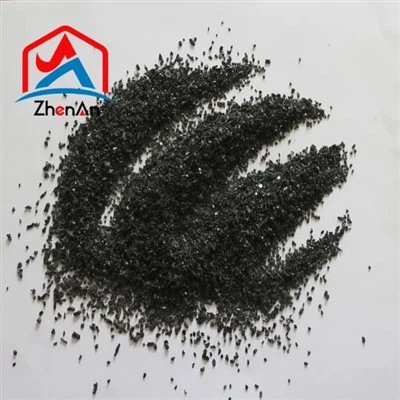

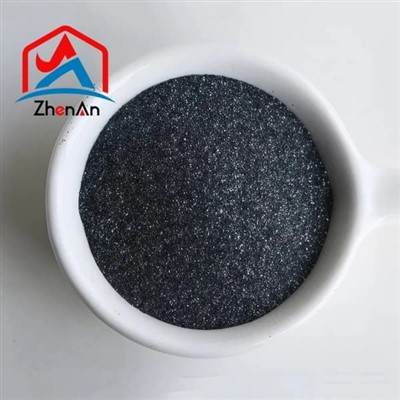
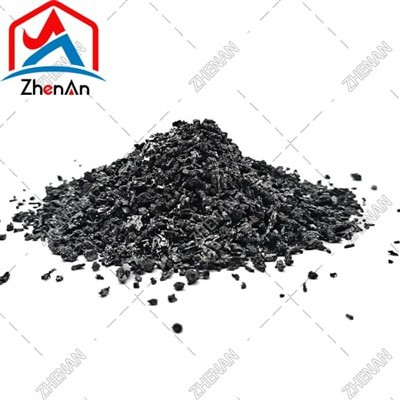

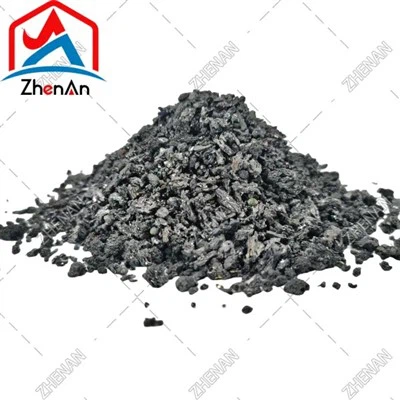
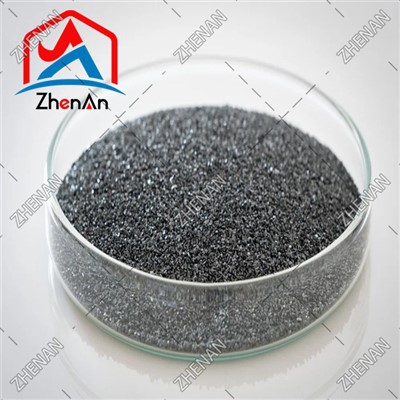

Introduction of Silicon Carbide
Silicon carbide, also known as SiC, is a semiconductor base material that consists of pure silicon and pure carbon. You can dope SiC with nitrogen or phosphorus to form an n-type semiconductor or dope it with beryllium, boron, aluminum, or gallium to form a p-type semiconductor. While many varieties and purities of silicon carbide exist, semiconductor-grade quality silicon carbide has only surfaced for utilization in the last few decades.
Robust Crystal Structure
Silicon carbide is composed of light elements, silicon (Si) and carbon (C). Its basic building block is a crystal of four carbon atoms forming a tetrahedron, covalently bonded to a single silicon atom at the centre. SiC also exhibits polymorphism as it exists in different phases and crystalline structures
High Hardness
Silicon carbide has a Mohs hardness rating of 9, making it the hardest available material next to boron carbide (9.5) and diamond (10). It is this apparent property that makes SiC an excellent material choice for mechanical seals, bearings, and cutting tools.
High-temperature Resistance
Silicon carbide’s resistance to high temperature and thermal shock is the property that allows SiC to be used in the manufacturing of fire bricks and other refractory materials. The decomposition of silicon carbide starts at 2000°C
Conductivity
If SiC is purified, its behaviour manifests that of an electrical insulator. However, by governing impurities, silicon carbides can exhibit the electrical properties of a semiconductor. For example, introducing varying amounts of aluminium by doping will yield a p-type semiconductor. Typically, an industrial-grade SiC has a purity of about 98 to 99.5%. Common impurities are aluminium, iron, oxygen, and free carbon
Chemical Stability
Silicon carbide is a stable and chemically inert substance with high corrosion resistance even when exposed or boiled in acids (hydrochloric, sulphuric, or hydrofluoric acid) or bases (concentrated sodium hydroxides). It is found to react in chlorine, but only at a temperature of 900°C and above. Silicon carbide will start an oxidation reaction in the air when the temperature is at approximately 850°C to form SiO2
The Advantages of Silicon Carbide


Higher Temperature Capability: SiC can operate at much higher temperatures than silicon, often up to 400 degrees C and potentially up to 800 degrees C, allowing for more efficient electronic devices that can handle extreme conditions without significant performance degradation. This impressive capability is due to the high thermal conductivity of SiC and the low intrinsic concentration of charge carriers. High thermal conductivity means that a SiC transistor can use a much smaller heatsink than an equivalent silicon chip or can use a comparable heat sink and tolerate much more heat. Low concentration of charge carriers at room temperature means that SiC can tolerate greater electrical load before thermally liberated electrons add to the intrinsic charge carriers, flooding the transistor, and locking it in the “on” position (conducting state).
Higher Breakdown Voltage: SiC has a breakdown voltage roughly eight times greater than that of silicon (~300 kV/cm versus 2400 kV/cm), meaning that it can withstand higher voltages before experiencing unpredictable conduction behavior and potentially catastrophic failure.
Smaller Form Factor: This advantage follows from the higher breakdown voltage and thermal conductivity of SiC relative to silicon. If a silicon and a silicon carbide transistor were each designed to withstand up to the same breakdown voltage, the traditional silicon transistor would need to be much larger than the SiC transistor. The smaller SiC transistor could have as little as 0.25-0.5% as much “on” resistance as the larger silicon transistor. This property enables the design of more efficient and compact power electronic systems with lower power losses.
Higher Switching Frequencies: The smaller form factor of SiC transistors and consequent higher switching frequency enables the design of lighter weight and less expensive inductors and capacitors for use in a power converter like those used to charge EV batteries.
How Is Silicon Carbide Made?
The simplest silicon carbide manufacturing method involves melting silica sand and carbon, such as coal, at high temperatures―up to 2500 degrees Celsius. Darker, more common versions of silicon carbide often include iron and carbon impurities, but pure SiC crystals are colorless and form when silicon carbide sublimes at 2700 degrees Celsius. Once heated, these crystals deposit onto graphite at a cooler temperature in a process known as the Lely method.
Lely method
During this process, a granite crucible heats to a very high temperature, usually by way of induction, to sublimate silicon carbide powder. A graphite rod with lower temperature suspends in the gaseous mixture, which inherently allows the pure silicon carbide to deposit and form crystals.
Chemical vapor deposition
Alternatively, manufacturers grow cubic SiC using chemical vapor deposition, which is commonly used in carbon-based synthesis processes and used in the semiconductor industry. In this method, a specialized chemical blend of gases enters a vacuum environment and combines before depositing onto a substrate.
Both methods of silicon carbide wafer production require vast amounts of energy, equipment, and knowledge to be successful.
What Are the Uses of Silicon Carbide?
Silicon Carbide Used in Military Bulletproof Armor
Silicon carbide is used to manufacture bulletproof armor. The property of this compound that makes it to be applied for such a purpose is its hardness. Bullets and other harmful objects will have to contend with the hard ceramic blocks that silicon carbide forms. Bullets can't penetrate the ceramic blocks.
Silicon Carbide Used in Semiconductors
Silicon carbide becomes a semiconductor when dopants are added to it. Dopants like boron and aluminum added to silicon carbide make it become a p-type semiconductor. On the other hand, dopants such as nitrogen and phosphorus added to silicon carbide make it become an n-type semiconductor.
Silicon Carbide Used in Abrasives
Silicon carbide is commonly used as an abrasive because of how hard it is. It is used in the manufacture of grinding wheels, cutting tools, and sandpaper. Silicon carbide abrasives are usually cheaper than other abrasives of similar quality. The abrasives are used to grind materials such as steel, aluminum, cast iron, and rubber.
Silicon Carbide Used in Electric Vehicles
Silicon carbide is a better choice over silicon for powering electric vehicles. Electric vehicles powered by silicon carbide are highly efficient and cost-effective.
Silicon Carbide Used in Jewelry
Structurally similar to diamond, yet more lustrous, cheaper, more durable, and lighter than diamond, silicon carbide is a well-deserved alternative to diamond in the jewelry industry.
Silicon Carbide Used in Fuel
In addition to its other uses, silicon carbide is used as fuel. It is used as a fuel in steel manufacture and produces purer steel than most other fuels. It is also a cheaper and more environmentally-friendly fuel.
Silicon Carbide Used in LEDs
The first set of light-emitting diodes (LEDs) to be produced made use of silicon carbide technology. It was used to manufacture blue, red, and yellow LEDs. LEDs are used in televisions, display boards, and computers.
Certifications


