


Silicon Metal
Zhen An: Leading Silicon Metal Manufacture in China
ZhenAn International Co., Limited. is located in Anyang City, China, and has more than 30 years of experience and technology accumulation in the metallurgical industry.
Currently, Zhenan operates fully automatic and intelligent production lines for metallurgical and metal materials, with a stable annual output and sales volume of 150,000 metric tons.
Our factory covers an area of approximately 30,000 square meters, supporting stable and large-scale production.
Quality Assurance
Our quality inspectors strictly control the quality of each link to ensure that each batch of products meets international standards.
Good Service
Zhenan has an excellent and professional team dedicated to providing you with high-quality metallurgical product materials and services.
Customization
According to customer requirements, we also provide customized metallurgical material products with special specifications, shapes and materials.
Fast Delivery
With huge production capacity, we ensure in time delivery and transport to the destination in the first time.
Wide Range Of Applications
ZhenAn metallurgical materials products are widely used in casting, steelmaking, electricity, non-ferrous metals, petrochemicals, glass, building materials and other fields, and are exported to more than 80 countries and regions in the world.


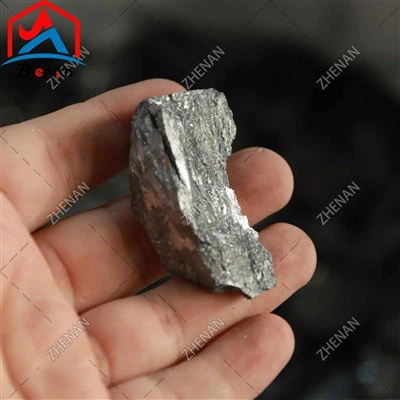


Introduction of Silicon Metal
Silicon metal is a gray and lustrous semi-conductive metal that is used to manufacture steel, solar cells, and microchips. Silicon is the second most abundant element in the earth's crust (behind only oxygen) and the eighth-most common element in the universe.
Key Properties of Silicon Metal
Semiconductor Excellence
Silicon metal's unique electronic properties make it a premier choice for semiconductor manufacturing. Its ability to conduct and control electrical current forms the foundation of modern electronics.
Abundance and Availability
Silicon is the second most abundant element in Earth's crust, ensuring a consistent supply for various applications. This accessibility contributes to its widespread use in industry.
Thermal and Chemical Stability
Silicon metal exhibits exceptional thermal and chemical stability, making it suitable for high-temperature environments, as well as harsh chemical and corrosive conditions.
Metallurgical Grade Silicon: This is the most common type of silicon metal, with a purity level of around 98-99%. It is primarily used in the production of aluminum alloys and silicones.
Chemical Grade Silicon: This type of silicon metal has a purity level of around 99.999%, making it suitable for use in the semiconductor industry. It is also used in the production of solar cells.
Ultra High Purity Silicon: This type of silicon metal has a purity level of 99.9999% or higher, making it suitable for use in advanced semiconductor applications, such as the production of microprocessors.
Solar Grade Silicon: This type of silicon metal has a purity level of around 99.999%, and is specifically used in the production of solar cells and photovoltaic modules.
Electronic Grade Silicon: This type of silicon metal has a purity level of around 99.999%, and is specifically used in the production of electronic components, such as diodes and transistors.
Applications of Silicon Metal
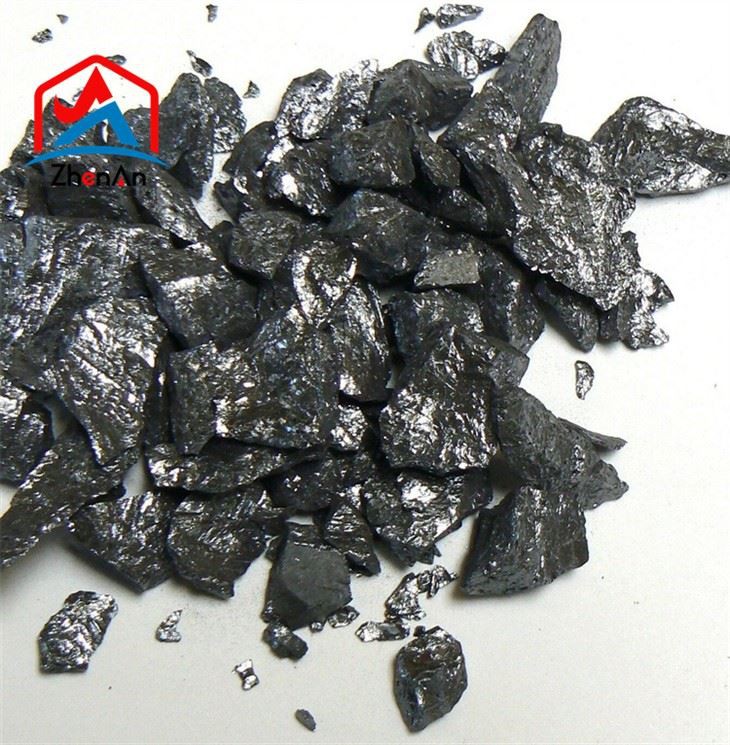


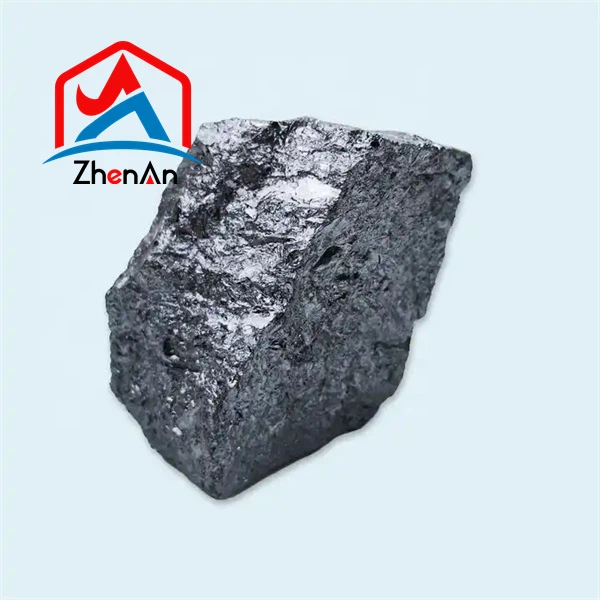
Metal Silicon Is Mainly Used In Aluminum Ingot Factories
Generally, the addition of metal silicon is used to improve the mechanical properties of aluminum, which is a common method in the preparation of aluminum alloys. For example, in the application of aluminum alloy die-casting, silicon can improve the degree of forming and increase the yield.
In The Aluminum Alloy Industry
Replacing pure aluminum in the steelmaking process can increase the utilization rate of deoxidizers, purify molten steel, and improve the quality of steel. The demand for industrial silicon for aluminum used in automobiles and other industries is quite large, so the development of the automobile industry in a region or country has a direct impact on the rise and fall of the industrial silicon market.
Additives For Non-ferrous-based Alloys.
Industrial silicon is also used as an alloying agent for demanding silicon steels, and as a deoxidizer for smelting special steels and non-ferrous-based alloys.
Chemical Industry
Used in the production of silicone rubber, silicone resin, silicone oil and other organic silicon. Silicone rubber has good elasticity and high temperature resistance. It is used to make medical supplies, high temperature gaskets, etc. Silicone resin is used to produce insulating paint, high-temperature paint, etc. Silicone oil is an oily substance whose viscosity is not affected by temperature. It is used to produce lubricants, polishes, fluid springs, dielectric liquids, etc. It can also be processed into colorless and transparent liquids.
Metal silicon is purified by a series of processes to produce polycrystalline silicon and monocrystalline silicon for use in the photovoltaic industry and the electronics industry.
Polycrystalline silicon cells are mainly used in solar rooftop power stations, commercial power stations and urban power stations with high land costs. The current technology is mature and widely used. The demand for metal silicon for solar photovoltaic products has increased significantly, and modern large-scale integrated circuits are almost all used It is made of high-purity metallic silicon, and high-purity metallic silicon is still the main raw material for the production of optical fibers. It can be said that metallic silicon has become a basic pillar industry in the information age.
Where Does The Silicon Metal Come From?
The production of metal silicon is based on carbon heat, that is, the method of smelting in the mineral heat furnace with silica and carbon reducing agent. The silicon purity of this production is 97% to 98%, so that the silicon can generally be used for metallurgical purposes.
If a higher grade of silicon is to be obtained, it needs to be refined to remove impurities and obtain metal silicon with a purity of 99.7% to 99.8%.
The smelting of metal silicon with quartz sand as raw material, including quartz sand block, preparation furnace material and mineral heat furnace smelting several steps. Generally speaking, high-quality quartz sand will be directly used in the production of high-grade quartz glass products, and even processed into gemstone grade such as crystal, tourmaline and other products. Slightly worse grade but large reserves, slightly better mining conditions, the surrounding electricity is cheaper to produce metal silicon.
At present, China's production of metal silicon carbon thermal method of the production process route: the common use of silica as raw material, petcoke, charcoal, charcoal, low-gray coal, such as reducing agent, in the mineral thermal furnace high temperature smelting, from silicon to restore the metal silicon, which is no slag buried arc high temperature smelting process. Therefore, although metal silicon is extracted from silica, not all silica is suitable for making metal silicon.
What Is The Difference Between Ferro Silicon And Silicon Metal
Composition:
Ferro silicon is an alloy of iron and silicon. It typically contains between 15% and 90% silicon and small amounts of other elements such as carbon, phosphorus, and sulfur. The amount of silicon in ferro silicon determines its properties, such as its melting point, density, and hardness. The composition of ferro silicon can vary depending on the specific application it is intended for.
Silicon metal , on the other hand , is a pure form of silicon. It is produced by heating quartz and carbon in an electric furnace at very high temperatures. The resulting material is a crystalline structure that is nearly 100% silicon. Silicon metal is often used as a raw material for the production of other silicon-based materials such as silicones, silanes, and semiconductors.
Properties:
Ferro silicon is a hard and brittle material that is resistant to corrosion and oxidation. It has a high melting point and density, making it suitable for use in steelmaking, cast iron production, and other industrial applications. Ferro silicon is also a good source of silicon for the production of silicon-based alloys.
Silicon metal, on the other hand, is a shiny, silver-gray material material that is extremely pure and has a high melting point. It is an excellent conductor of heat and electricity and is often used in the production of electronic components such as computer chips, solar cells, and semiconductors. Silicon metal is also used an alloying agent in the production of aluminum and steel.
Uses:
Ferro silicon is primarily used as an additive in steelmaking and cast iron production. It is added to molten iron to improve its properties such as strength, hardness, and resistance to corrosion. Ferro silicon is also used in the production of other alloy such as silicon manganese, silicon aluminum, and silicon bronze.
Silicon metal is used in a wide range of applications. Its excellent electrical conductivity makes it a key material in the production of electronic components such as computer chips, solar cells, and semiconductors. Silicon metal is also used in the production of aluminum alloys, which are used in the automotive and aerospace industries. Additionally, it is used as a raw material for the production of silicones, silanes, and other silicon-based materials.
Certifications


