


How to Choose Nickel Wire
When you buy nickel wire, start with the material grade, then confirm diameter, tolerance, temper, surface condition and packing.
Two nickel wires with the same nominal diameter may perform differently if their chemistry, carbon content, temper or surface condition is different. For repeat purchasing, the safest approach is to keep the quotation, purchase specification, batch COA and incoming inspection requirements aligned.
This guide explains the main points to check before ordering pure nickel wire and helps you avoid common specification gaps in overseas procurement.
Nickel 200, Nickel 201, N4 and N6 Wire Grades
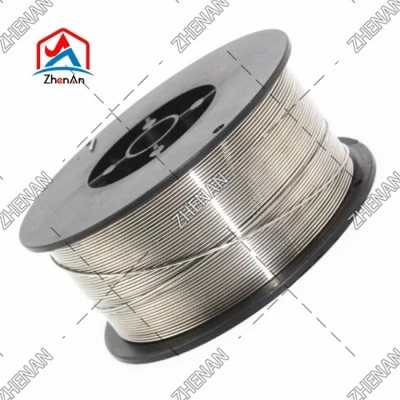
Pure nickel wire is supplied under different grade systems. Nickel 200 and Nickel 201 are widely used commercially pure nickel grades, while N4 and N6 are common Chinese pure nickel designations.
Do not select nickel wire from the nickel percentage alone. The complete chemistry, especially carbon, iron, copper, manganese, silicon and other trace elements, should be checked against the applicable grade specification and batch COA.
| Grade | Material Characteristic | Main Purchasing Consideration |
| Nickel 200 | Commercially pure nickel | General industrial use where standard Nickel 200 chemistry is suitable |
| Nickel 201 | Low-carbon commercially pure nickel | Preferred where lower carbon is required, particularly for elevated-temperature applications |
| N4 | High-purity nickel grade | Confirm the applicable N4 chemistry and impurity limits before purchase |
| N6 | Commercial pure nickel grade | Confirm the required N6 composition against the order specification |
Buying Tip: "99.9% nickel wire" is not a complete purchasing specification. State the required grade or full chemistry so the material can be matched to your actual process.
How to Choose Nickel Wire Diameter
Nickel wire diameter should be selected according to the finished component, forming method, winding equipment, electrical requirement and mechanical load.
Fine nickel wire requires tighter control of drawing accuracy and spool winding, while larger-diameter wire is generally easier to handle but serves different fabrication and process requirements.
| Diameter Range | Typical Purchasing Consideration |
| 0.025-0.10mm | Fine-wire applications where diameter control, winding tension and spool quality are especially important |
| 0.10-0.50mm | Precision components, winding, instruments and small formed parts |
| 0.50-3.0mm | General industrial wire, fabrication, forming and process applications |
| Above 3.0mm | Larger wire or rod-type applications; confirm coil handling and dimensional requirements |
If you need ultra-fine material, you can also review our 0.025mm Pure Nickel Wire page for dedicated fine-wire information.
Nickel Wire Diameter Tolerance
Diameter tolerance should be written into the purchase specification instead of being assumed from the nominal wire diameter.
The achievable tolerance depends on the nominal diameter, drawing process, material condition and applicable production standard. Fine wire usually requires tighter dimensional control than larger industrial wire.
For example, a buyer should specify the requirement in a complete form such as:
Example: N4 nickel wire, Ø0.025mm, required diameter tolerance, annealed condition, spool packed.
This makes the production requirement and incoming inspection standard much clearer.
If you need an especially tight tolerance, confirm whether it is achievable for the selected diameter before the order is finalized.
Nickel Wire Temper and Surface Condition
Material chemistry and diameter do not fully determine how nickel wire behaves during winding, forming or feeding. Temper and surface condition also matter.
Before placing an order, confirm whether your process requires:
- soft or annealed wire;
- half-hard or hard condition;
- bright or clean drawn surface;
- specific surface cleanliness;
- continuous-length wire;
- controlled spool winding.
A hard-drawn wire may behave very differently from an annealed wire even when both have the same grade and diameter.
If the material will run through automatic winding or feeding equipment, tell the supplier about your equipment requirements before production.
Common Pure Nickel Wire Applications
Pure nickel wire is used where nickel's corrosion resistance, electrical characteristics, ductility or chemical stability is required.
- electrical and electronic components: leads, connectors, fine-wire assemblies and selected winding components;
- battery and electrochemical components: where pure nickel material is specified;
- chemical equipment: components used in compatible corrosive-service environments;
- precision instruments: fine wire and small formed components;
- industrial fabrication: parts requiring commercially pure nickel instead of a nickel alloy.
Material Selection Note: pure nickel wire should not automatically be used as resistance heating wire. If electrical resistance heating is the main requirement, a nickel-chromium alloy such as NiCr may be more suitable.
For nickel alloy options and different alloy systems, see our Nickel Alloy Wire page.
6 Checks Before You Buy Nickel Wire
A complete nickel wire RFQ should define more than just grade and diameter.
- Confirm the material grade. State Nickel 200, Nickel 201, N4, N6 or the required chemical composition instead of writing only "pure nickel wire."
- Define diameter and tolerance. Include both the nominal diameter and the allowable dimensional deviation.
- Confirm temper. Annealed, soft, half-hard and hard wire behave differently during forming and winding.
- Define surface condition. State the required finish and cleanliness if they affect your downstream process.
- Confirm packing. Specify spool, coil, cut length, spool weight or other packing requirements.
- Confirm quality documents. State whether you need COA, MTC, SDS/MSDS, inspection records or other documents.
Why Batch COA Matters for Nickel Wire
A product name such as "Nickel 200 wire" or "99.9% nickel wire" should not be the only basis for incoming acceptance.
The batch COA provides a record of the chemistry associated with the supplied material. Depending on the grade and your process, you may need to check elements such as:
- Ni;
- C;
- Fe;
- Cu;
- Mn;
- Si;
- other elements required by your specification.
For repeat orders, compare the COA against the agreed specification and retain the records so batch-to-batch consistency can be reviewed over time.
Nickel Wire Packing for Export
Packing requirements depend strongly on wire diameter and how the material will be used after delivery.
Fine nickel wire is commonly handled on spools because spool winding helps maintain an organized continuous feed. Larger wire may also be supplied according to the agreed coil, spool or cut-length requirement.
Before ordering, confirm:
- spool or coil requirement;
- required net weight;
- wire winding condition;
- wire-end protection;
- label information;
- moisture and transport protection requirements.
For fine wire, poor winding or unsuitable spool dimensions can create production problems even when the wire chemistry itself is correct.
Common Nickel Wire Buying Mistakes
Buying only by nickel purity.
Two products described as "99.9% nickel wire" may follow different material specifications and impurity limits.
Leaving diameter tolerance undefined.
A nominal diameter without an agreed tolerance is not a complete dimensional specification.
Ignoring wire temper.
Hard and annealed nickel wire can behave differently during bending, winding and feeding.
Comparing price without comparing packing.
Ultra-fine wire supplied on controlled spools may have different processing and packing costs from larger coil-packed wire.
Using a different specification on the PO and COA.
The quotation, purchase order and final quality documents should refer to the same grade and acceptance requirements.
What to Send for a Nickel Wire Quote
| RFQ Item | Information to Provide |
| Grade | Nickel 200, Nickel 201, N4, N6 or required chemistry |
| Diameter | Required nominal wire diameter |
| Tolerance | Required dimensional tolerance |
| Temper | Soft, annealed, half-hard, hard or other required condition |
| Surface | Required surface finish or cleanliness |
| Packing | Spool, coil, cut length or other packing requirement |
| Quantity | Required kilograms, meters, number of spools or bulk quantity |
| Application | Your downstream use or production process |
| Documents | COA, MTC, SDS/MSDS or inspection requirements |
| Destination | Destination port or delivery location |
Nickel Wire Buying FAQ
Q1: What is the difference between Nickel 200 and Nickel 201 wire?
Nickel 200 and Nickel 201 are both commercially pure nickel grades. One important difference is that Nickel 201 has a lower carbon limit, which can make it more suitable where low carbon is required, particularly at elevated temperatures.
Q2: Is 99.9% nickel wire the same as Nickel 200?
Not necessarily. A nickel percentage alone does not define the complete material specification. Nickel 200 has defined chemical limits, so the full chemistry should be checked rather than assuming equivalence from nickel purity alone.
Q3: What is the difference between N4 and N6 nickel wire?
N4 and N6 are different pure nickel material designations with different chemistry limits. The correct grade should be selected from the required specification and downstream application rather than from the grade name alone.
Q4: Can you supply 0.025mm nickel wire?
Yes, 0.025mm pure nickel wire is available subject to grade, tolerance, temper, spool and final production specification confirmation.
Q5: How tight can nickel wire diameter tolerance be?
The achievable tolerance depends on the wire diameter, grade, drawing condition and production requirements. Tight tolerances should be confirmed before the order is finalized.
Q6: Should I choose soft or hard nickel wire?
It depends on your forming and winding process. Soft or annealed wire is easier to bend and form, while harder conditions may be selected where greater stiffness is required. State the required temper in the RFQ.
Q7: Is pure nickel wire suitable for heating elements?
Pure nickel should not automatically be selected for resistance heating. If resistance heating is the main purpose, a nickel-chromium alloy such as NiCr may be more appropriate.
Q8: How should fine nickel wire be packed?
Fine wire is commonly supplied on spools to support controlled winding and continuous feeding. The required spool size, net weight and winding condition should be confirmed with the supplier.
Q9: What should be included on the nickel wire COA?
The COA should identify the material grade and applicable chemical composition. The exact elements and limits should match the agreed purchase specification.
Q10: What information should I send for a nickel wire quotation?
Send the required grade, diameter, tolerance, temper, surface condition, packing, quantity, application, destination and document requirements.
Need Pure Nickel Wire?
Send us your nickel grade, diameter, tolerance, temper, spool requirement, quantity and destination. We can check the available specification and prepare a quotation according to your purchasing requirements.
Request a Nickel Wire Quote Email Your Requirement
Nickel Wire Buying Summary
The most important nickel wire purchasing parameters are grade, diameter, tolerance, temper, surface condition and packing.
Do not approve an order from nickel purity or wire diameter alone. Confirm the complete material specification, dimensional requirement and delivery condition before production, then use the batch documentation and incoming inspection to verify that the delivered wire matches what was ordered.


