


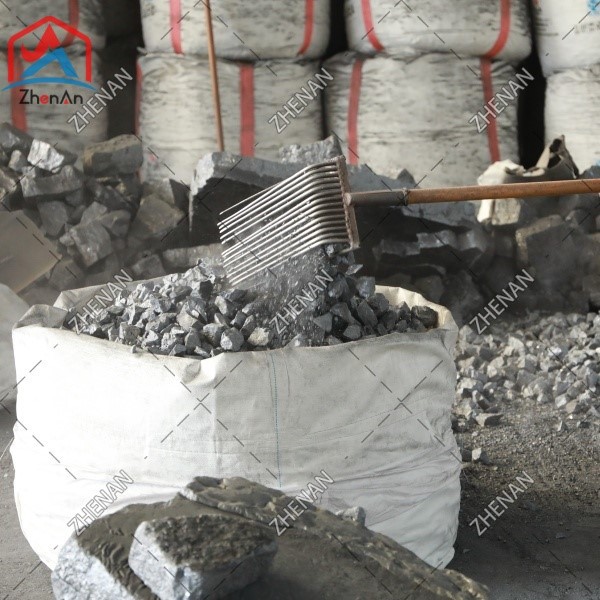
Ferrosilicon is a metallic alloy composed primarily of iron and silicon, supplied as lump, granule, or tailored forms for metallurgical operations. In industrial purchasing, ferrosilicon is valued because it provides a practical way to introduce silicon units into molten metal with predictable dissolution behavior and controllable recovery. Although it is frequently traded as a bulk alloy, its real performance is determined by a combination of composition, minor-element profile, and particle size distribution rather than by the grade name alone.

What ferrosilicon is and why it exists as an alloy
Silicon is a highly useful element in metallurgical reactions, but it is rarely added as pure silicon in many steel and foundry practices because process economics, handling, and reaction control often favor alloy forms. Ferrosilicon functions as a silicon carrier with iron as the matrix, allowing stable handling and consistent charging behavior. In practice, buyers use it to achieve metallurgical targets such as deoxidation, chemistry trimming, and microstructure control.
How ferrosilicon is produced
Commercial ferrosilicon is produced in electric submerged arc furnaces, where silica-based materials are reduced at high temperature in the presence of carbon, with iron-bearing inputs participating in alloy formation. The furnace route matters because it governs both the thermodynamic pathway and the impurity "signature" of the final product. Raw material selection and furnace operating discipline influence minor elements, while downstream crushing and screening define the physical form that customers actually charge.
What ferrosilicon is used for in steelmaking
In steelmaking, ferrosilicon is primarily used as a deoxidizer and an alloying additive. Deoxidation is a kinetics-sensitive function: oxygen in molten steel promotes oxide inclusions and can destabilize refining and casting practice. Silicon has a strong affinity for oxygen under steelmaking conditions, so silicon additions help reduce dissolved oxygen and improve cleanliness. Beyond deoxidation, silicon is also a deliberate alloying element in many steel grades, contributing to property control and process stability.
A practical point for buyers is that "effective silicon delivered" depends on recovery, which is influenced by addition timing, melt stirring, slag condition, and particle size. That is why a tight size distribution and controlled fines ratio can be more important than a small difference in the headline chemical assay.
What ferrosilicon is used for in foundries
In foundry applications, ferrosilicon is widely used to support consistent silicon addition and to influence solidification behavior in cast iron systems. Silicon affects graphite formation and the balance between different microstructural constituents, which can impact casting soundness, machinability, and mechanical properties. Foundry users typically prioritize repeatability. For them, stable lot-to-lot chemistry and stable size grading reduce variation between heats and reduce the need for corrective adjustments.
What "grades" really mean and what they do not mean
Ferrosilicon grades are commonly defined by silicon content bands. A higher silicon grade generally delivers more silicon units per ton, which can reduce required addition weight. However, silicon percentage alone does not define usability. Two shipments at the same silicon level can behave differently if their minor elements differ or if one contains excessive fines or oversize pieces.
Depending on the end use, buyers may care about specific minor elements. For example, some operations prefer lower aluminum or lower titanium behavior to reduce certain inclusion or cleanliness risks, while others focus on low carbon behavior to avoid changing carbon balance. The correct approach is application-driven: start from the process sensitivity and translate that into the impurity lines that actually matter.
Physical properties that control real performance
For most plants, the most influential physical properties are:
- Size distribution and top size, which affect dissolution kinetics and recovery.
- Fines ratio, which affects dust loss, handling loss, and dosing accuracy.
- Mechanical robustness, which affects fines growth during transit and rehandling.
- Packaging strength and labeling durability, which affect traceability and claims prevention.
Because these properties influence effective silicon delivery, professional procurement often evaluates ferrosilicon on total cost in use rather than price per ton.
How to specify ferrosilicon in a purchase order
A practical specification should include:
- Grade and silicon content requirement.
- The minor-element lines relevant to your process (only the ones you truly control to).
- A size range aligned with your charging method and equipment.
- A practical fines tolerance.
- Batch-linked documentation, where COA lot numbers match packing marks and align with shipping documents.
This structure prevents most avoidable disputes and improves consistency in real production.
FAQ
Q1: What is ferrosilicon?
A: Ferrosilicon is an iron-silicon alloy used as a silicon carrier for steelmaking and foundry operations.
Q2: What is ferrosilicon used for in steelmaking?
A: Mainly deoxidation and silicon alloying to support cleanliness and chemistry control.
Q3: Why do foundries use ferrosilicon?
A: To deliver silicon consistently and support repeatable microstructure and casting behavior.
Q4: Does a higher silicon grade always mean better performance?
A: Not necessarily. Performance also depends on minor elements, size distribution, and fines control.
Q5: Why is size distribution important?
A: It influences dissolution speed, recovery consistency, and dust or handling loss.
Q6: What should importers check before accepting a shipment?
A: Batch-linked COA, packing marks, packing list consistency, size grading, fines condition, and packaging integrity.
Why Choose Us
Factory-direct supply, stable capacity: Reliable monthly output supports repeat orders and planned procurement.
Consistent quality for repeat production: Stable chemistry and lot-to-lot consistency reduce process variability.
Controlled sizing or mesh distribution: Clear size/mesh specifications with screening discipline to limit off-size content and unnecessary ultra-fines.
Batch-linked documentation and traceability: COA lot numbers match packing marks and align with shipping documents, reducing mixed-lot risk.
Export-grade packing to reduce claims: Strong, sealed packing reduces leakage, moisture exposure, and fines growth in transit.
Professional service and fast response: Market-aware team supports specification confirmation, shipment planning, and documentation coordination.


About Our Company
We are a factory direct supply partner with stable monthly supply capacity and a factory area of about 30,000 m². Our products are exported to 100+ countries and regions, and we have served 5,000+ customers. Our sales team understands industry dynamics and market trends, and we supply ferrosilicon, silicon metal, and other metallurgical products.


