


The Problem Foundries Face
You add ferro silicon inoculant to your ductile iron melt to control graphite shape and prevent carbides. But not every bag of ferro silicon delivers the same result.
One pour gives you good nodularity. The next pour shows chill. Shrinkage appears inconsistently. You adjust your addition rate, but the root cause remains unclear.
The issue is often not the amount of ferro silicon you add. It's the consistency of the ferro silicon you are adding.
What Affects Inoculation Performance in Ductile Iron
Inoculation success comes down to five factors:
| Factor | Impact on Casting Quality |
|---|---|
| Particle size distribution | Too fine → fade faster. Too coarse → dissolves late or not at all. |
| Chemistry consistency | Variations in Al, Ca, or rare earths change nucleation behavior. |
| Anti-nodularizing elements | Ti, As, Pb, Bi - even at trace levels - hurt nodularity. |
| Storage and oxidation | Oxidized surface means less active inoculation. |
| Addition timing | Late addition vs. ladle vs. in-mold - different results. |
Most standard ferro silicon is produced as an alloy addition, not optimized as a ductile iron inoculant.
What Makes a High-Performance Inoculant for Ductile Iron
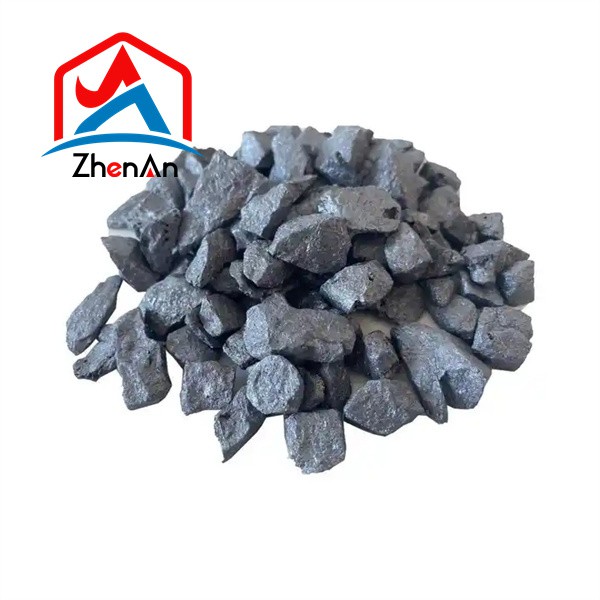
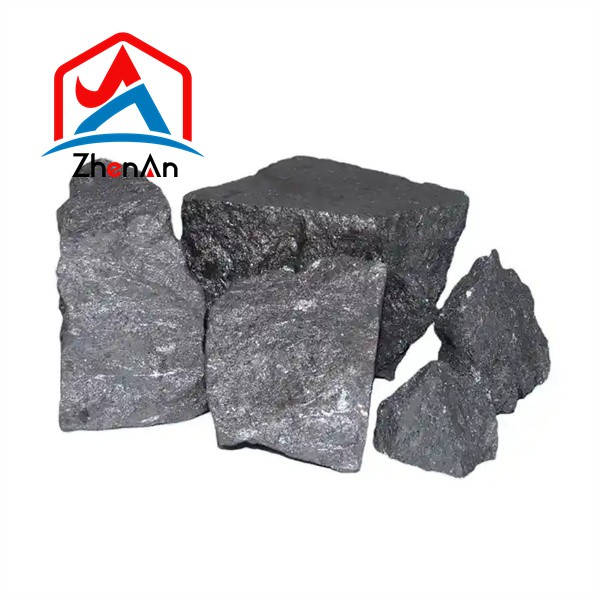
A good inoculant is not just ferro silicon with a label. It is designed specifically for ductile iron castings:
| Feature | Benefit for Ductile Iron |
|---|---|
| Narrow size range | Dissolves at the same rate batch after batch. Predictable fade. |
| Controlled Al and Ca | Promotes nucleation without increasing dross or pinholes. |
| Low anti-nodularizing elements | Protects nodularity even at low addition rates. |
| Fresh production | Minimal oxidation, maximum active inoculation. |
| Batch-to-batch consistency | One less variable in your process control. |
The result is not a cheaper bag of inoculant. It is fewer rejects, less shrinkage, and stable nodularity - heat after heat.

Typical Inoculation Comparison
| Inoculant Type | Typical Performance |
|---|---|
| Standard ferro silicon (wide sizing, variable chemistry) | Inconsistent nodularity, occasional chill, unpredictable shrinkage |
| High-performance ductile iron inoculant (controlled sizing, stable chemistry) | Stable nodularity (≥85%), reduced white chilling, predictable shrinkage control |
For a foundry running multiple heats per day, the difference shows up directly in your scrap rate and rework cost.
Size Options for Ductile Iron Inoculation
| Size | Best For | Typical Addition Method |
|---|---|---|
| 0.2-0.8 mm | Late inoculation, fine control | Stream or mold |
| 0.2-1.0 mm | General ductile iron inoculation | Ladle or stream |
| 0.5-1.5 mm | Larger castings, slower solidification | Ladle |
| 1-3 mm | Heavy section castings | Furnace or ladle |
| Custom sizes | Specialized mold designs | In-mold or core |
The right size depends on your casting weight, section thickness, and inoculation method.
Chemistry (Typical for Ductile Iron Inoculant)
| Element | Typical Range | Why It Matters |
|---|---|---|
| Si | 70-75% | Base carrier |
| Al | 0.5-1.2% | Promotes nucleation, but too much causes pinholes |
| Ca | 0.5-1.5% | Controls fade rate |
| Rare Earths (if applicable) | 0.5-2.0% | For heavy section or high-purity requirements |
| Ti | ≤0.05% | Anti-nodularizing - keep low |
| Other tramp elements | As low as possible | Each hurts nodularity |
Tighter chemistry and custom rare earth levels are available for specific casting requirements.

About Your Supplier
ZhenAn has been supplying ferro silicon to EAF steelmakers for 30+ years. We are based in Anyang, China, close to major producing regions, with direct logistics to Qingdao, Tianjin, and Shanghai ports.
What we do differently for inoculant production:
- Dedicated screening line - Narrow size ranges, not just "fines removed"
- Fresh production scheduling - Minimal stock time, low oxidation
- Batch chemistry tracking - Every shipment within your spec limits
- Third-party inspection - SGS or similar available upon request
- Small batch capability - Trial quantities available for new customers
What About Price?
Ductile iron inoculant is not a commodity. The cheapest bag is rarely the least expensive one to use.
If a standard inoculant gives you 2% scrap and a high-performance inoculant gives you 1% scrap on a 1,000-ton monthly production, the math is simple: the better inoculant pays for itself many times over.
To get current pricing for ferro silicon inoculant based on your ductile iron operation:
Contact us with your:
- Target size range
- Monthly or trial quantity
- Casting type (automotive, pipe, general engineering)
- Any specific chemistry requirements (aluminum, calcium, rare earths)
- Destination port (for CIF)
Email: sale@zanewmetal.com
Website: www.za-refractory.com

People Also Ask
1. What is ferrosilicon inoculant used for?
Ferrosilicon inoculant is added to molten ductile iron to promote graphite nucleation, prevent carbides (chill), and improve nodularity. Ferrosilicon (typically 70-75% Si) serves as the carrier for active elements like calcium, barium, or strontium that enhance inoculation efficiency.
2. What is the difference between ferrosilicon inoculant and nodularizer?
Nodularizer (typically ferrosilicon magnesium or FeSiMg) adds magnesium to convert graphite into spherical form. Ferrosilicon inoculant is added after nodularization to provide nucleation sites for graphite precipitation and prevent carbide formation. Both are essential for ductile iron production.
3. How does ferrosilicon inoculation affect ductile iron nodularity?
Ferrosilicon inoculation increases graphite nodule count by providing heterogeneous nucleation sites. Higher nodule count leads to better mechanical properties, reduced shrinkage, and improved machinability. Proper ferrosilicon inoculation can achieve nodularity of 85% or higher.
4. What causes inoculation fade in ferrosilicon treatment?
Inoculation fade occurs when nucleation sites diminish over time between ferrosilicon addition and solidification. Factors include high pouring temperature, long holding time, and excessive tramp elements like titanium or lead. Barium-containing ferrosilicon inoculants offer longer fade resistance.
5. What is the best ferrosilicon inoculant for ductile iron?
There is no single "best" ferrosilicon inoculant. Selection depends on casting section size, desired nodule count, and fade resistance requirements:
Standard ferrosilicon 75%: General use, short fade resistance
Ferrosilicon barium (FeSiBa) : Long fade resistance, ideal for heavy sections
Ferrosilicon strontium (FeSiSr) : Excellent for thin sections, reduces chill
Ferrosilicon zirconium (FeSiZr) : Prevents carbides, improves machinability
6. Can too much ferrosilicon inoculant cause problems?
Yes. Excess ferrosilicon inoculant can increase dross formation, pinholes, and shrinkage porosity. Over-inoculation may also raise final silicon content beyond specification, affecting hardness and machinability. Optimal ferrosilicon addition rate is typically 0.5-1.1% for ductile iron.
7. How to increase nodule count using ferrosilicon inoculant?
To increase nodule count: use effective ferrosilicon inoculation, maintain proper magnesium levels (0.035-0.045% residual Mg), control cooling rate, use pure base metal with low Ti and Pb, and consider late or stream inoculation with fine ferrosilicon for thin sections.
8. What is the composition of ferrosilicon inoculant?
Typical ferrosilicon inoculant composition varies by type:
Standard ferrosilicon 75: Si 74-79%, Ca 0.5-1%, Al 0.8-1.6%
Ferrosilicon barium (FeSiBa) : Si 60-65%, Ba 4-6%, Ca 0.8-2.2%
Ferrosilicon zirconium (FeSiZr) : Si 60-75%, Zr 1-6%, Ca 1-3%
Balance is iron with trace elements.
9. What is the HS code for ferrosilicon inoculant?
Ferrosilicon inoculant typically falls under HS code 72022100 – ferrosilicon containing by weight more than 55% of silicon. This is the same classification as standard ferrosilicon for metallurgical use.
10. Which foundries use the most ferrosilicon inoculant?
Ductile iron foundries producing automotive components (brake calipers, hubs, knuckles), pipe fittings, heavy machinery castings, and manhole covers are major ferrosilicon inoculant users. The global ductile iron casting market, driven by automotive and infrastructure demand, continues to consume increasing volumes of specialty ferrosilicon inoculants.


