


The Problem EAF Operators Face
You add ferro silicon to your electric arc furnace for deoxidation or alloying. But what actually stays in the melt?
If recovery is inconsistent - one heat gives you 85%, the next gives you 70% - you lose control over final chemistry. You over-add to be safe, which wastes material. Or you under-add and risk a rejected heat.
The issue is rarely the silicon content on the bag label. It's how much of that silicon survives the addition.
What Affects Ferro Silicon Recovery in EAF
Recovery isn't luck. It comes down to four factors:
| Factor | Impact on Recovery |
|---|---|
| Particle size distribution | Too many fines burn off rapidly. Too coarse takes longer to dissolve. |
| Oxidation level | Pre-oxidized material has less available silicon to begin with. |
| Addition method | Added to slag vs. deep into melt - different results. |
| Lump consistency | Mixed sizes create variable dissolution rates. |
Most standard ferro silicon is produced for general use, not optimized for EAF conditions.
What Makes High Recovery Ferro Silicon Different
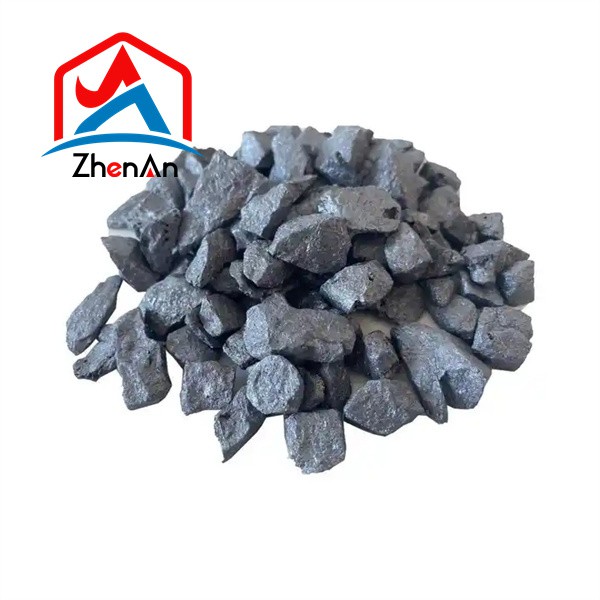
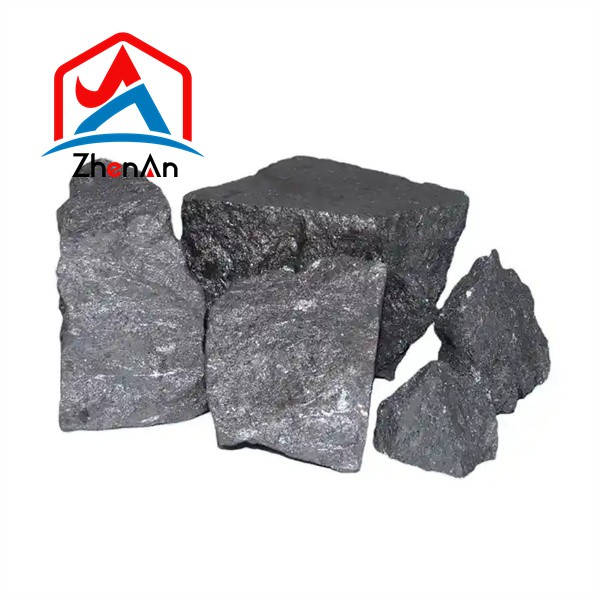
High recovery ferro silicon is designed specifically for electric arc furnace addition. The differences are in the details:
| Feature | Benefit for EAF |
|---|---|
| Controlled size range | Dissolves at a predictable rate. Less dust, less burn-off. |
| Low oxidation surface | More active silicon reaches the melt. |
| Narrow size distribution | Consistent dissolution from batch to batch. |
| Clean chemistry | Fewer unwanted elements entering the furnace. |
The result is not a higher "grade" in terms of Si%. It's a higher effective yield - the silicon that actually does its job.

Typical Recovery Comparison
| Product Type | Typical EAF Recovery Rate |
|---|---|
| Standard ferro silicon (wide sizing, some oxidation) | 70% - 80% |
| High recovery ferro silicon (controlled sizing, low oxidation) | 85% - 92% |
A 10-15 point difference in recovery means either:
Less material to achieve the same result, or
More consistent final chemistry with the same addition rate
Size Options for EAF Addition
| Size | Best For |
|---|---|
| 3-10 mm | Small furnaces, ladle addition |
| 10-50 mm | Standard EAF furnace addition |
| 10-100 mm | Large furnaces, deeper addition |
| Custom sizes | Available upon request |
The right size depends on your furnace size, addition point, and melt temperature.
Chemistry (Typical)
| Element | Typical | Note |
|---|---|---|
| Si | 75% or 72% | Standard grades |
| Al | ≤1.5% | Lower aluminum available |
| C | ≤0.2% | |
| P | ≤0.04% | |
| S | ≤0.02% |
Tighter chemistry control is available for specialty applications.

About Your Supplier
ZhenAn has been supplying ferro silicon to EAF steelmakers for 30+ years. We are based in Anyang, China, close to major producing regions, with direct logistics to Qingdao, Tianjin, and Shanghai ports.
What we do differently:
- Sizing control - We screen to tight ranges, not just "lump"
- Oxidation management - Fresh production, proper storage, clean surface
- Batch consistency - Every shipment within spec, not just "most of the time"
- Third-party inspection - SGS or similar available upon request
- Our typical export volume: 500 MT per month
What About Price?
High recovery ferro silicon is not priced like standard material - and it shouldn't be.
Standard ferro silicon competes on price per ton. High recovery ferro silicon competes on cost per effective unit of silicon.
If standard material gives you 75% recovery and high recovery gives you 88%, you need roughly 15% less material to achieve the same result. That changes the math entirely.
To get current pricing for high recovery ferro silicon based on your EAF operation:
Contact us with your:
- Target size range
- Monthly or per-order quantity
- Destination port (for CIF)
- Any specific chemistry requirements
Email: sale@zanewmetal.com
Website: www.za-refractory.com

People Also Ask
1. What is ferro silicon used for?
Ferro silicon is used as a deoxidizer and alloying agent in steelmaking, as an inoculant in cast iron production, and in the manufacturing of silicon steel.
2. What is the difference between silicon and ferrosilicon?
Pure silicon is a semiconductor used in electronics. Ferro silicon is an alloy of iron and silicon used in metallurgy for deoxidation and alloying.
3. How to make ferro silicon?
Ferro silicon is produced by reducing quartz (SiO₂) with coke or coal in a submerged electric arc furnace, with iron as a carrier.
4. Is ferrosilicon hazardous?
Yes. Ferrosilicon dust can be hazardous if inhaled and may react with moisture to release phosphine or arsine gases. Follow MSDS guidelines for safe handling.
5. What is the chemical composition of ferro silicon?
Typical composition: Si 75% or 72%, Al ≤1.5%, C ≤0.2%, P ≤0.04%, S ≤0.02%. Other grades (65%, 90%) and tighter controls are available.
6. What is the HS code for ferro silicon?
The common HS code for ferro silicon is 72022100 (ferro-silicon containing more than 55% silicon by weight).
7. What is ferro silicon density?
Ferro silicon density is approximately 2.2-3.0 g/cm³ depending on silicon content. 75% grade is roughly 2.4-2.6 g/cm³.
8. What is ferro silicon powder used for?
Ferro silicon powder is used in mineral processing as a dense medium for gravity separation, and in some welding and pyrotechnic applications.
9. Which melts faster, iron or steel?
Cast iron melts faster than steel due to its higher carbon content (2-4%), which lowers the melting point.
10. Who is the biggest exporter of ferroalloys?
China is the world's largest exporter of ferroalloys, including ferro silicon, followed by Russia, Brazil, and Ukraine.


