


Manganese Metal Flakes
The contact end of the aluminum strip can be a tenon, and the corresponding receiving end of the copper strip can be a mortise; or the contact end of the copper head can be a tenon, and the corresponding receiving end of the aluminum strip can be a mortise; in this way, the contact surface between the two can be greatly increased. Reduce the current loss caused by the different conductivity of aluminum strips and copper strips when they come into contact. At the same time, this connection can tightly connect the aluminum strips and copper strips, making it less likely that the connection will fall off.

Electrolytic Manganese Metal Flakes
The contact surface between the aluminum strip and the copper strip is a bevel, and the shapes of the bevels at the contact point correspond to each other. Setting the contact surface to be a bevel can increase the contact area between the copper strip and the aluminum strip, greatly increase the stability of the connection, and ensure better connection of the conductive area.
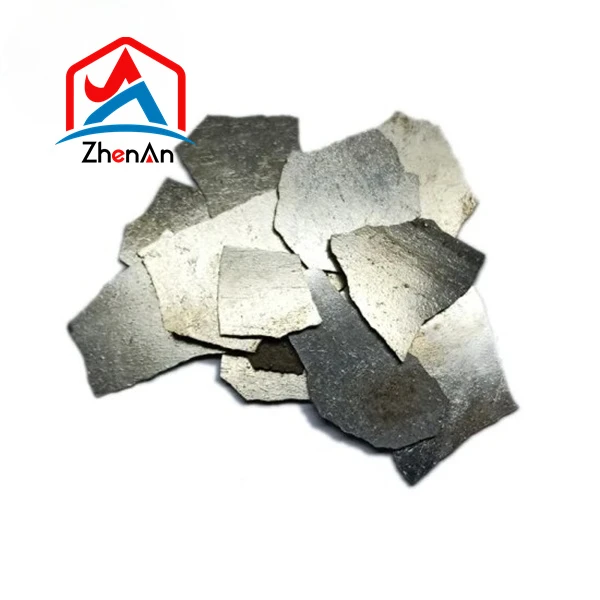
99.9% Electrolytic Manganese
Aluminum bars and copper bars are welded together for a convenient and stable connection. At the same time, as an alternative, stamping can also be used to tightly connect the aluminum bars and copper bars. The conductive material in the negative conductive rod for electrolytic manganese flakes is changed from pure copper with equal cross-section to pure copper and pure aluminum with different conductivity properties according to the actual needs of conductivity. This does not change the conductivity requirements required for the production of electrolytic manganese flakes and does not increase electrolysis. The power consumption, that is, under the premise that the conductive properties of the electrolytic manganese flake anode remain unchanged, the manufacturing cost of the electrolytic manganese anode is reduced by 10-12%, the weight is reduced by 8-9%, and the labor intensity of workers is also greatly reduced.


