


Why Buyers Should Care?
Have you ever faced steel failing strength tests or being rejected due to impurities, even when production seemed perfect? The problem might not be your process - it might be the wrong ferrovanadium grade.
A 10% difference in vanadium content can mean a 20% shift in production cost or even complete product failure. Here are the five questions every smart buyer should ask before choosing between FeV60 and FeV70.
1. What Do "60" and "70" Mean?
The numbers indicate vanadium content:
FeV60: 58–62% vanadium - medium-grade alloy, balanced cost and performance.
FeV70: 68–72% vanadium - high-grade alloy, designed for premium steel.
FeV70 also has stricter impurity limits:
Carbon ≤0.25%, Silicon ≤1.2%, Phosphorus ≤0.05%,
while FeV60's standards are more flexible for cost-driven applications.
In short: FeV60 focuses on economy, FeV70 on precision.
2. Which One Fits Your Production?
FeV60: Ideal for construction rebar, structural steel, and general machinery parts - moderate strength, maximum economy.
FeV70: Essential for pipeline steel, bearing steel, and aerospace alloys - where strength, purity, and toughness are non-negotiable.
Using FeV60 in high-performance steel may cause tensile failures or uneven structures - increasing rework costs far beyond the alloy savings.

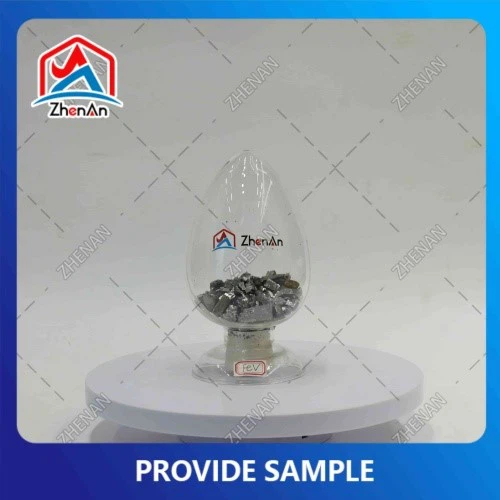

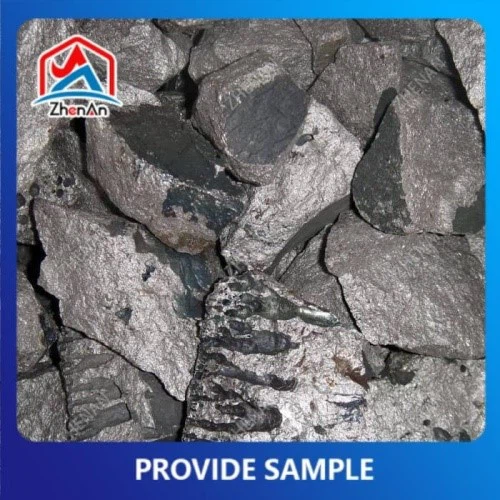


3. Is FeV70 Worth the Higher Price?
Yes - and sometimes it's even cheaper in total cost.
FeV70 costs 15–20% more per ton, but requires less material to reach the same strength level.
If FeV60 requires 1.2× more addition, FeV70 can reduce alloy costs by 10–12% overall, while maintaining stable quality.
FeV60 = low upfront cost, great for volume steel
FeV70 = higher unit price, better long-term efficiency
4. What Other Quality Factors Should Buyers Check?
Professional buyers know that consistency beats price.
When sourcing FeV alloys, always check:
1.Particle Size: 10–80 mm, matching feeding systems
2.Density: 5.5–6.0 g/cm³ for uniform distribution
3.Packaging: FeV70 requires anti-oxidation liners for stable performance during transport
5. Market Outlook - The Smart Buyer's Future?
With the steel industry shifting toward high-strength, low-emission production and the rapid growth of vanadium batteries, FeV70 is on the rise.
1.FeV60 will remain vital for traditional construction and machinery.
2.FeV70 is quickly becoming the strategic choice for high-end manufacturing and new energy sectors.
Conclusion
FeV60 and FeV70 are not rivals - they're solutions for different priorities.
If your focus is cost and volume, FeV60 delivers.
If your goal is performance, precision, and future growth, FeV70 defines your edge.
Ready to optimize your ferrovanadium use?
Our technical experts can assess your steel grades and recommend the optimal FeV ratio to help you cut costs and boost performance.


